
How to Choose a Commercial Battery Energy Storage System?
Release time: 2026-09-24
Table of Contents
Choosing a commercial energy storage system is not simply a matter of selecting the largest battery available. A factory, warehouse, office building, solar farm, or other commercial facility may have very different load profiles, grid constraints, backup requirements, and operating temperatures.
A Commercial Battery Energy Storage System should therefore be selected according to how the project generates, consumes, stores, and manages electricity. Getting the battery capacity right is only one part of the equation. Power rating, battery chemistry, cooling method, inverter compatibility, scalability, and total cost of ownership can be equally important.
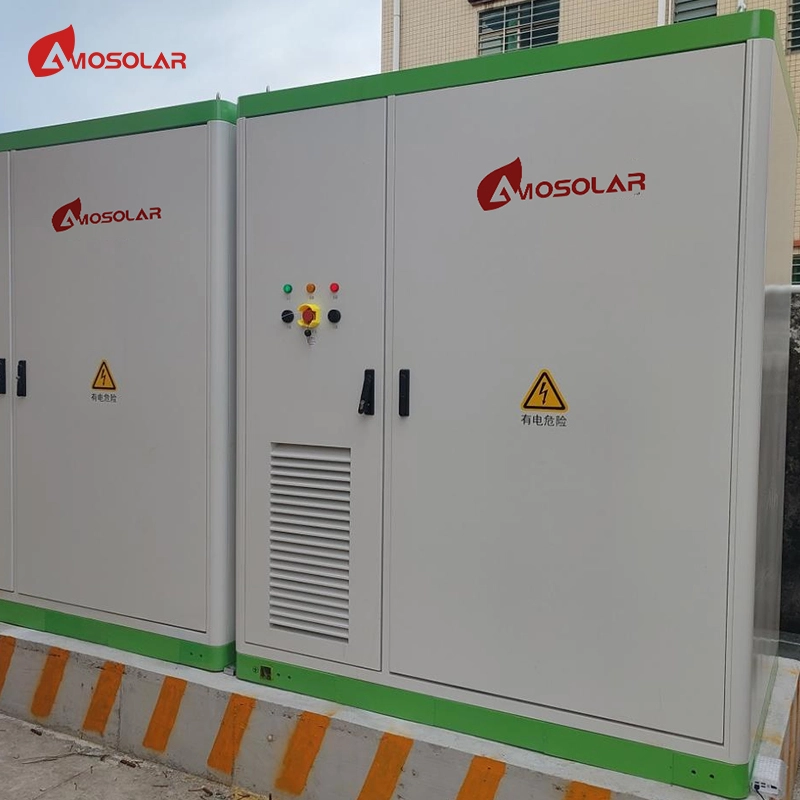
What Is a Commercial Battery Energy Storage System?
A Commercial Battery Energy Storage System is an integrated energy storage solution designed to store and discharge electricity for commercial or industrial applications.
Depending on the system architecture, a BESS can include:
- Battery cells and battery modules
- Battery Management System (BMS)
- Power Conversion System (PCS)
- Energy management controls
- Thermal management
- Fire protection
- Electrical protection
- Monitoring and communication systems
Commercial BESS can be connected to rooftop solar, ground-mounted PV, the utility grid, or a combination of these sources.
This makes the system capable of supporting several operating strategies instead of serving only as backup power.
What Should You Consider Before Choosing a Commercial BESS?
The first step should be defining the project’s actual objective.
A commercial facility may install battery storage to:
- Increase solar self-consumption
- Reduce peak demand
- Shift electricity consumption
- Provide backup power
- Reduce exposure to time-of-use electricity prices
- Manage grid export limitations
- Improve renewable energy utilization
- Support microgrid operation
Different objectives can lead to very different battery specifications.
A system designed primarily for peak shaving, for example, may prioritize high discharge power, while a solar-storage project focused on energy shifting may require greater usable energy capacity.
How Do You Calculate the Required Battery Capacity?
Battery capacity is normally expressed in kWh or MWh and determines how much energy the system can store.
A simplified starting point is:
Required Battery Capacity ≈ Energy to Be Shifted ÷ Usable DoD ÷ System Efficiency
However, this is only a starting calculation.
A proper project assessment should also consider:
- Daily electricity consumption
- PV generation
- Load curve
- Peak demand
- Required backup duration
- Battery State of Charge (SOC)
- Depth of Discharge (DoD)
- Round-trip efficiency
- Seasonal changes
- Expected battery degradation
For example, a factory that needs to reduce a 500kW demand peak for two hours has a very different requirement from a warehouse that needs 500kWh of backup energy overnight.
The first project is strongly influenced by power, while the second is more strongly influenced by energy capacity and duration.
Power vs Capacity: Why Does the Difference Matter?
One of the most common mistakes in BESS selection is treating power and energy capacity as the same thing.
| Parameter | Meaning | Example |
|---|---|---|
| Power | Maximum instantaneous charging/discharging capability | 100kW |
| Capacity | Total stored energy | 215kWh |
| Duration | Approximate discharge time at a given load | 2.15 hours at 100kW |
| Efficiency | Energy recovered after charging and discharging | Depends on system |
| SOC | Current stored-energy level | 50% SOC |
A 215kWh battery does not automatically mean it can discharge 215kW.
The PCS and battery architecture determine how much power the system can deliver.
For commercial applications, both values need to be evaluated together.
Which Battery Chemistry Is Best for Commercial BESS?
Battery chemistry affects safety, cycle life, energy density, temperature performance, cost, and system design.
LiFePO4
LiFePO4 is widely used in commercial energy storage because of its mature supply chain, long cycle life, thermal stability, and suitability for frequent charge-discharge operation.
Amosolar offers high-voltage LiFePO4 systems ranging from rack-mounted batteries to larger commercial energy storage configurations. Its product range includes high-voltage systems from approximately 20kWh to more than 225kWh.
Sodium-Ion
Sodium-ion technology provides another option for stationary storage.
Its material characteristics and potential low-temperature performance make it worth evaluating for selected commercial applications. Amosolar currently offers a C&I Sodium-Ion BESS with scalable configurations from 76.8kWh to 200kWh.
The right chemistry should be selected according to the actual project rather than assuming one battery technology is universally superior.
Air-Cooled vs Liquid-Cooled Commercial BESS
Cooling technology becomes increasingly important as storage capacity and power density increase.
Air-Cooled BESS
Air-cooled systems can be a practical choice for many distributed commercial projects.
Potential advantages include:
- Simpler thermal architecture
- Easier maintenance
- Suitable for many medium-scale installations
- Straightforward cabinet-based deployment
Amosolar’s BESS portfolio includes 102kWh and 103kWh air-cooled commercial systems.
Liquid-Cooled BESS
Liquid cooling can provide more precise thermal management for high-density energy storage.
It can become more relevant when projects require:
- Higher energy density
- Larger battery capacity
- More intensive charge-discharge cycles
- More controlled cell temperature
- Large outdoor installations
Amosolar offers liquid-cooled systems including 215kWh, 233kWh, 261kWh, 418kWh, and 5MWh configurations.
How Does Solar Integration Affect BESS Selection?
When a Commercial Battery Energy Storage System is connected to solar PV, the battery needs to be evaluated as part of the complete power architecture.
A typical solar-plus-storage system may operate as:
PV → Load
while excess generation follows:
PV → Battery
and later:
Battery → Load
Depending on the project, the system may also exchange electricity with the grid.
This means the BESS needs to work correctly with:
- PV inverter
- PCS
- Grid connection
- Load equipment
- Protection system
- Monitoring platform
- Energy management controls
For projects with limited grid export capacity, the BESS may also need to absorb surplus PV generation before it reaches the export limit.
What About Backup Power?
Backup capability requires more than simply installing a large battery.
The system must be designed to determine:
- Which loads are critical
- How much power those loads require
- How long backup should last
- Whether the system can operate independently from the grid
- How the inverter handles grid failure
- Whether the battery has enough usable capacity
- Whether the system needs automatic transfer functionality
A commercial facility may not need to keep every electrical load operating during an outage.
In many cases, supporting selected critical loads can provide a better balance between backup performance and battery investment.
How Important Is Battery Scalability?
Commercial electricity demand can change over time.
A facility may add production equipment, install more solar panels, expand its operating hours, or increase its electricity consumption.
A scalable BESS allows storage capacity to grow with the project.
Amosolar’s portfolio includes modular rack-mounted batteries, stack systems, cabinet-based BESS, and containerized systems, giving projects multiple paths for capacity expansion.
This is particularly relevant for businesses that do not want to make their entire long-term energy investment on day one.
How Should Commercial BESS Suppliers Be Compared?
Price should not be the only selection criterion.
A more useful supplier evaluation should include:
| Evaluation Factor | What to Check |
|---|---|
| Battery Chemistry | LFP, Sodium-Ion, or other technology |
| Usable Capacity | Actual energy available to the project |
| Power Rating | Maximum charge/discharge capability |
| Cycle Life | Expected operating cycles |
| Cooling | Air or liquid cooling architecture |
| BMS | Protection, balancing, monitoring, communication |
| PCS Compatibility | Electrical integration with the project |
| Certifications | Applicable safety and transport certifications |
| Scalability | Future capacity expansion |
| Warranty | Coverage, cycles, throughput, and conditions |
| Manufacturing Capability | Production capacity and quality control |
| After-Sales Support | Technical service and project support |
For larger projects, supplier manufacturing capability becomes especially important. A BESS may operate for many years, so consistency in cell sourcing, assembly, testing, software integration, and quality control matters as much as the initial quotation.
Why Choose Amosolar for Commercial Battery Energy Storage?
Amosolar’s BESS portfolio is designed around multiple commercial and industrial storage requirements, including air-cooled and liquid-cooled systems, LFP and sodium-ion technologies, cabinet solutions, and containerized energy storage.
The current product range extends from smaller commercial systems to 2.5MWh and 5MWh containerized solutions.
This gives EPC companies, distributors, project developers, and commercial users the flexibility to evaluate BESS according to actual power, capacity, cooling, chemistry, and application requirements.
Rather than treating every project as a standard battery installation, the system can be matched to the facility’s load profile, solar generation, grid connection, and future expansion plans.
Frequently Asked Questions
What is a Commercial Battery Energy Storage System?
A Commercial Battery Energy Storage System is an integrated battery-based solution designed to store and discharge electricity for commercial and industrial facilities. It can support solar self-consumption, peak shaving, backup power, load shifting, and other energy-management strategies.
How large should a commercial BESS be?
The required size depends on the project’s load profile, PV capacity, peak demand, backup requirements, electricity tariffs, grid limitations, and desired operating strategy.
What is the difference between kW and kWh in BESS?
kW measures power, or how quickly electricity can be charged or discharged. kWh measures energy capacity, or how much electricity the battery can store.
Is LiFePO4 suitable for commercial energy storage?
Yes. LiFePO4 is widely used in commercial BESS because of its cycle-life characteristics, thermal stability, safety profile, and mature supply chain.
Is Sodium-Ion suitable for commercial BESS?
Yes. Sodium-ion batteries can be suitable for selected commercial and stationary applications, particularly where their temperature characteristics, material availability, and system economics provide an advantage.
Should commercial BESS use air cooling or liquid cooling?
It depends on system size, power density, operating conditions, and thermal-management requirements. Air cooling can be suitable for many medium-scale systems, while liquid cooling can be advantageous for larger and higher-density BESS.
What should I ask a BESS supplier before purchasing?
Ask about battery chemistry, usable capacity, power rating, cycle life, cooling architecture, BMS, PCS compatibility, certifications, warranty terms, scalability, manufacturing capability, and after-sales technical support.

