How Does Battery Storage Reduce Solar Energy Curtailment?
Release time: 2026-09-11
Table of Contents
Solar power plants can produce more electricity than the grid or on-site loads can absorb at certain times. When that happens, operators may have to reduce PV output even though sunlight is available. This is known as Solar Energy Curtailment, and it can reduce the economic value of an otherwise productive solar asset.
A Battery Energy Storage System (BESS) offers a practical way to manage this mismatch. By storing excess solar electricity and releasing it when demand or grid capacity increases, battery storage can turn otherwise curtailed generation into usable energy.

What Is Solar Energy Curtailment?
Solar Energy Curtailment occurs when a PV system intentionally operates below its available generation capacity.
Several factors can cause this situation:
- Grid congestion: Transmission or distribution networks may not have enough capacity to accept additional solar generation.
- Low daytime demand: PV output can reach its peak when local electricity consumption is relatively low.
- Export restrictions: A solar project may have a grid connection limit that prevents it from exporting its full output.
- Grid balancing: System operators may reduce renewable generation to maintain voltage, frequency, or overall grid stability.
- Oversupply: Too much renewable electricity may be available at the same time in a particular region.
For a solar project owner, the problem is not that the PV modules cannot generate electricity. The problem is that the electricity cannot always be consumed, exported, or stored when it is produced.
Why Is Solar Curtailment Becoming More Important?
The rapid expansion of renewable energy is changing the way electricity grids operate.
Solar generation is naturally concentrated during daylight hours. As more PV capacity is connected to the same grid, generation can increasingly exceed demand or available transmission capacity during certain periods.
This creates a timing mismatch:
High Solar Generation → Low Grid Absorption → Surplus Electricity → Curtailment
Later in the day, the situation can reverse:
Low Solar Generation → Higher Demand → Greater Need for Grid Electricity
Battery storage addresses this mismatch by shifting energy from one period to another.
The issue is becoming increasingly relevant in major renewable markets. Recent reporting indicates that grid constraints are contributing to significant renewable-energy curtailment in several countries, strengthening the case for storage and other forms of grid flexibility.
How Does a Battery Energy Storage System Reduce Curtailment?
A Battery Energy Storage System changes when electricity can be used.
Instead of sending all PV generation directly to the grid, the system can prioritize electricity in several ways:
- Solar electricity supplies on-site loads.
- Surplus solar electricity charges the battery.
- Remaining electricity can be exported within the permitted grid limit.
- Stored energy is discharged when solar production falls or demand increases.
This creates an energy buffer between solar generation and electricity consumption.
For example, imagine a commercial PV system producing 500 kW at midday while the facility consumes only 250 kW and the grid connection permits another 100 kW of export.
Without storage, up to 150 kW of potential generation may need to be curtailed.
With an appropriately sized BESS, part of that 150 kW surplus can be stored and discharged later.
The exact amount depends on battery power, available capacity, system efficiency, operating strategy, and the duration of the surplus.
What Are the Main Benefits of Using BESS With Solar?
1. Capture Excess Solar Generation
The most direct benefit is capturing electricity that would otherwise be wasted.
A battery can charge during periods when:
- PV output is high
- On-site demand is low
- Grid export is restricted
- Electricity prices are relatively low
The stored energy can then be used later instead of relying entirely on grid electricity.
2. Shift Solar Energy to Higher-Demand Periods
Solar production generally decreases toward the evening, while electricity demand may remain high.
Battery storage allows a project to move part of its solar generation profile from midday to later hours.
This can increase solar self-consumption and improve the utilization of the PV system.
3. Reduce Export Peaks
A BESS can also help control the amount of electricity exported to the grid.
Rather than allowing solar output to exceed the permitted export limit, the battery can absorb part of the excess generation.
This can be particularly useful for projects where expanding the grid connection would be expensive, delayed, or technically difficult.
4. Improve Renewable Energy Utilization
Curtailment means that available renewable generation is not fully utilized.
By storing surplus electricity, a Battery Energy Storage System can increase the percentage of solar generation that eventually reaches an electrical load.
This is especially valuable when a project has strong solar resources but limited grid absorption capacity.
How Should a BESS Be Sized for Curtailment?
Battery sizing should not be based on PV capacity alone.
Several parameters need to be considered:
| Parameter | Why It Matters |
|---|---|
| PV Capacity | Determines potential solar surplus |
| Export Limit | Defines how much PV power can be sent to the grid |
| Battery Power | Determines how quickly surplus energy can be absorbed |
| Battery Capacity | Determines how long the battery can store energy |
| Curtailment Duration | Determines required storage duration |
| Load Profile | Shows how much solar power can be consumed directly |
| PCS Rating | Determines charging and discharging power |
| Round-Trip Efficiency | Affects recoverable stored energy |
| Battery SOC Window | Determines available charging headroom |
A system with a large energy capacity but insufficient charging power may still fail to capture short periods of extreme solar surplus.
Conversely, installing excessive battery capacity may increase project costs without providing proportional benefits.
The goal is therefore to match battery power and energy capacity to the project’s actual curtailment profile.
Air-Cooled vs Liquid-Cooled BESS for Solar Projects
Thermal management becomes increasingly important as BESS capacity and operating intensity increase.
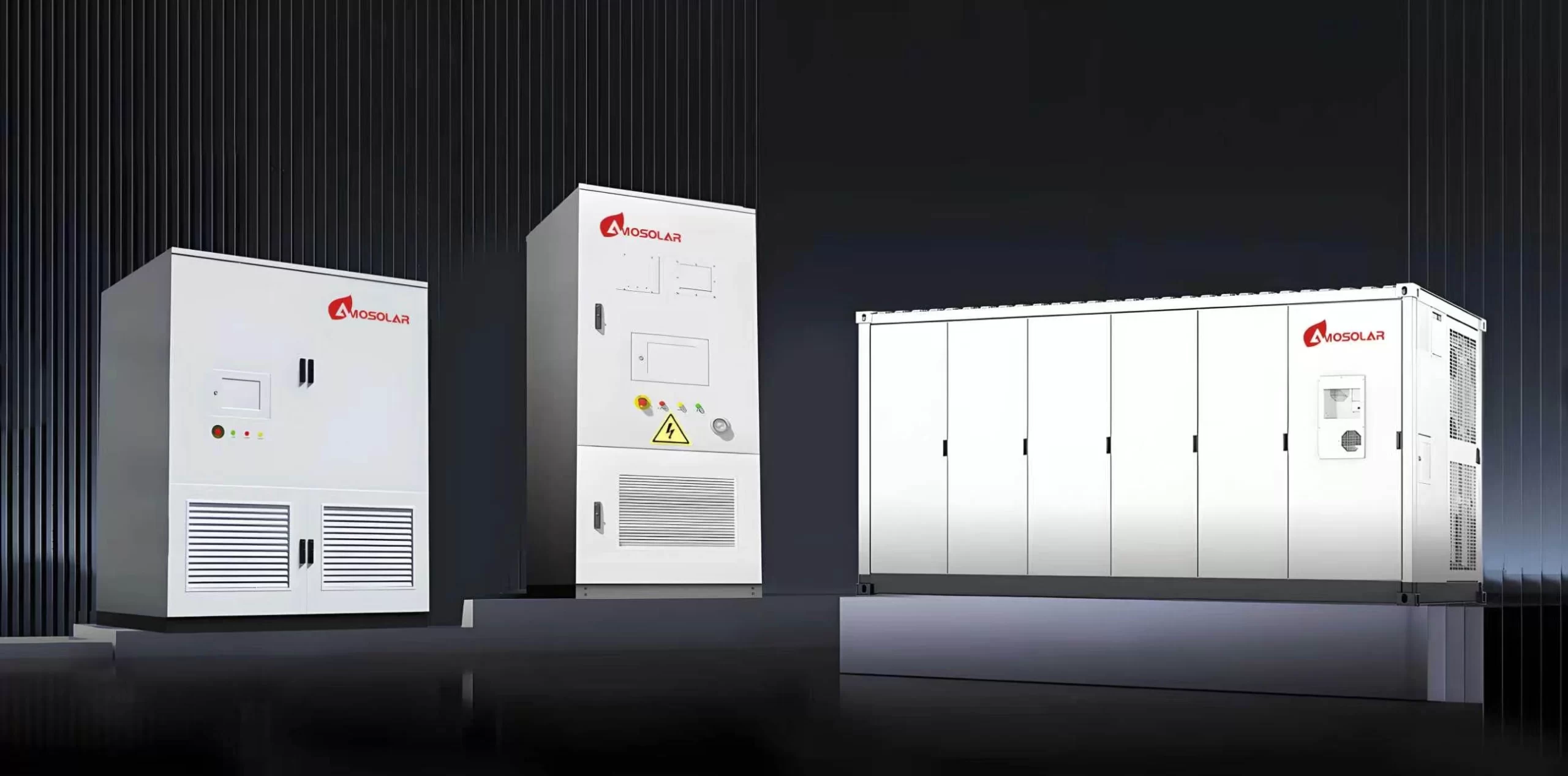
Amosolar offers both air-cooled and liquid-cooled BESS configurations. Its portfolio includes air-cooled systems such as 102kWh and 103kWh cabinets, as well as larger liquid-cooled systems including 215kWh, 261kWh, 418kWh, and 5MWh configurations.
| BESS Type | Typical Consideration | Suitable Direction |
|---|---|---|
| Air Cooling | Simpler thermal architecture and suitable for many distributed projects | Small-to-medium C&I systems |
| Liquid Cooling | More precise thermal management for higher-density systems | Larger C&I and utility-scale projects |
| LFP BESS | Mature chemistry with strong cycle-life characteristics | Broad solar-storage applications |
| Sodium-Ion BESS | Alternative chemistry with different temperature and material characteristics | Selected C&I and stationary storage projects |
The right choice depends on capacity, ambient conditions, installation environment, required power, and operating profile.
Can BESS Eliminate Solar Curtailment Completely?
Not necessarily.
Battery storage can significantly reduce curtailment when it is properly sized and operated, but it cannot guarantee that every unit of surplus solar electricity will be captured.
Curtailment can still occur when:
- The battery is already fully charged.
- Solar surplus exceeds the battery’s maximum charging power.
- Grid constraints persist for longer than the available storage duration.
- The battery must reserve capacity for other operating requirements.
- The project has additional export or interconnection restrictions.
This is why BESS should be considered part of a broader energy-management strategy rather than a universal solution to every grid constraint.
Why Is Solar Plus Storage Becoming a More Practical Model?
The economics of solar projects are increasingly influenced by when electricity is generated, not simply how much electricity is produced.
As electricity demand rises and grid infrastructure faces capacity constraints, the ability to store and dispatch renewable electricity becomes increasingly valuable. Recent market developments show strong investment growth in co-located solar and storage projects, while rising electricity demand is also increasing interest in energy storage.
For developers, the question is therefore shifting from:
“How much solar power can this project generate?”
to:
“How much of that generation can the project actually use, store, and deliver when it has the highest value?”
That is where BESS becomes strategically important.
Why Choose Amosolar for Solar Energy Storage?
Amosolar provides a broad BESS portfolio designed for different solar-storage requirements, from compact commercial cabinets to multi-megawatt-hour containerized systems.
Its current product range includes air-cooled and liquid-cooled BESS, LFP-based systems, sodium-ion BESS, and containerized systems up to 5MWh.
For project developers, EPC companies, distributors, and commercial users, this range makes it possible to select storage capacity, cooling architecture, battery chemistry, and system configuration according to actual project requirements rather than forcing every application into the same BESS design.
Frequently Asked Questions
What is Solar Energy Curtailment?
Solar Energy Curtailment occurs when a solar PV system reduces its electricity generation even though it could technically produce more power. Grid congestion, export limits, low demand, and grid stability requirements are common causes.
How does BESS reduce solar curtailment?
A Battery Energy Storage System stores excess solar electricity when PV generation exceeds demand or grid export capacity. The stored energy can then be discharged when solar production falls or electricity demand increases.
Can battery storage prevent all solar curtailment?
No. A BESS can reduce curtailment, but its effectiveness depends on battery power, storage capacity, duration of the surplus, grid restrictions, and the operating strategy.
What size BESS is needed for a solar farm?
There is no universal size. The appropriate BESS depends on PV capacity, export limitations, curtailment duration, load profile, battery power rating, required storage duration, and project economics.
What is the difference between battery power and battery capacity?
Battery power, measured in kW or MW, indicates how quickly the battery can charge or discharge. Battery capacity, measured in kWh or MWh, indicates how much energy it can store.
Is liquid cooling necessary for a solar BESS?
Not always. Air cooling can be suitable for many smaller systems, while liquid cooling can provide more precise thermal management for higher-density and larger-scale BESS installations. The appropriate architecture depends on the project.